
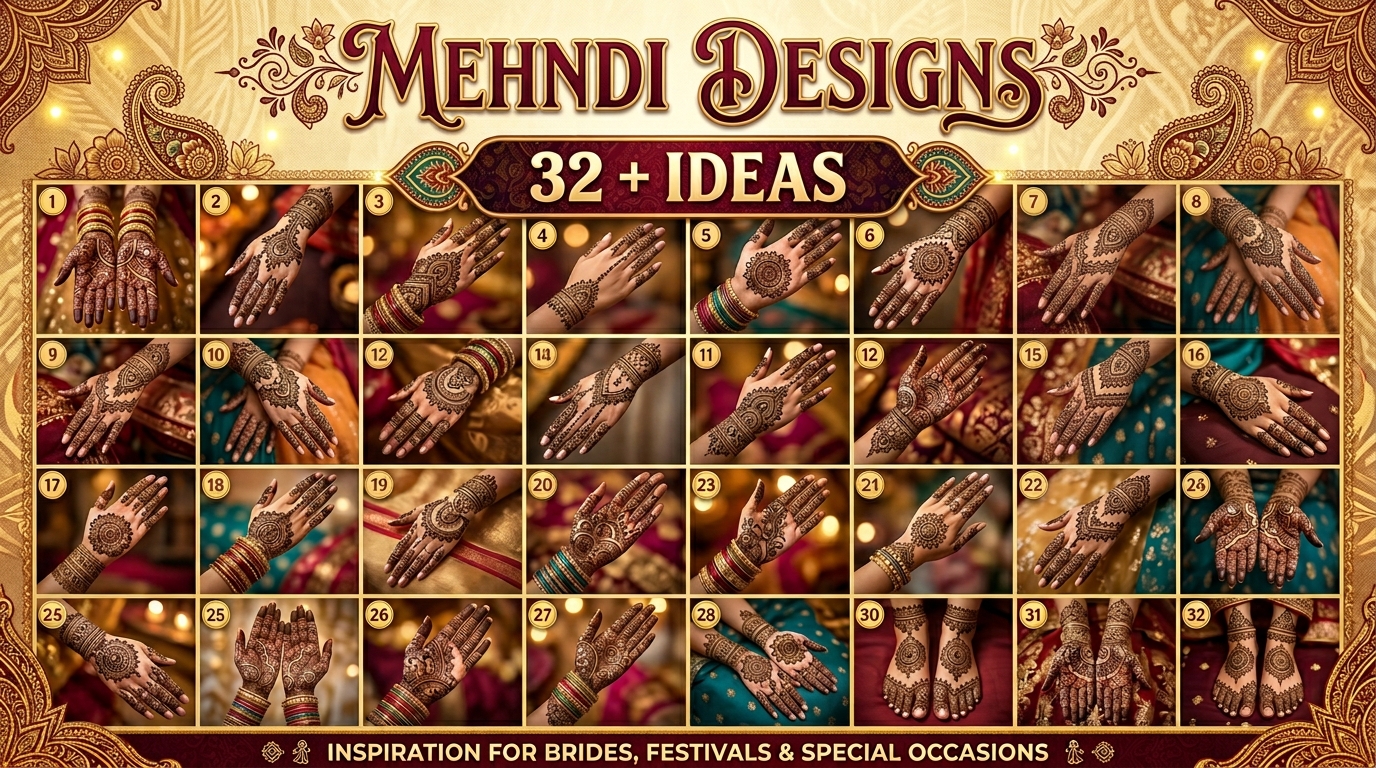
Is there anything quite like the moment you unwrap dried henna paste and see the deep, rich stain revealed underneath? That little gasp of excitement never really gets old, does it? Whether it’s the night before a wedding, the morning of Eid, or just a random Tuesday because you felt like treating yourself, mehndi designs have this incredible way of turning ordinary hands into something that feels celebratory and deeply personal.
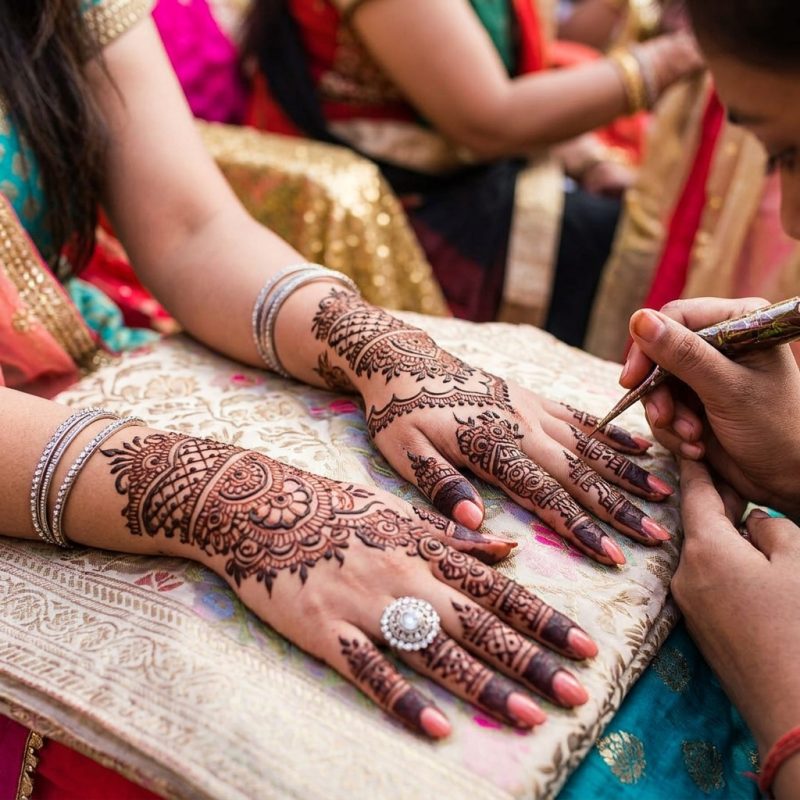
I still remember sitting cross-legged on the floor for my cousin’s wedding, watching the mehndi artist work in complete silence while the whole room buzzed with music and laughter around us. Hours later, I looked down at my hands and genuinely didn’t recognize them — in the best possible way. That experience sparked a fascination with mehndi that has stuck with me ever since, through countless festivals, weddings, and quiet self-care evenings with a cone of henna and absolutely nowhere to be. This guide is everything I’ve learned along the way, distilled into one place for you.
What Exactly Is Mehndi, and Why Does It Matter So Much?
Before diving into the designs themselves, let’s appreciate what mehndi actually represents — because it’s so much more than decoration.
Mehndi refers to the temporary body art created using paste made from the henna plant, applied to the skin in intricate patterns that stain a reddish-brown color once dried and removed. The tradition stretches back thousands of years across South Asia, the Middle East, and North Africa, historically used to mark celebrations, mourning, healing, and major life transitions. Today, mehndi remains deeply tied to weddings, festivals like Eid and Diwali, and countless cultural milestones — though it’s increasingly embraced simply as beautiful, expressive body art on its own terms.
What makes mehndi genuinely special is that it’s temporary but meaningful. Unlike a tattoo, it fades naturally over one to three weeks, which means every application is its own unique moment — never permanent, always intentional, always worth the time it takes to create.
Understanding the Major Mehndi Design Styles
Mehndi isn’t one single aesthetic — it’s an entire world of regional styles, each with distinct characteristics, motifs, and visual philosophies. Knowing these styles helps you communicate exactly what you want to your artist or choose the right tutorial if you’re doing it yourself.
Indian Mehndi
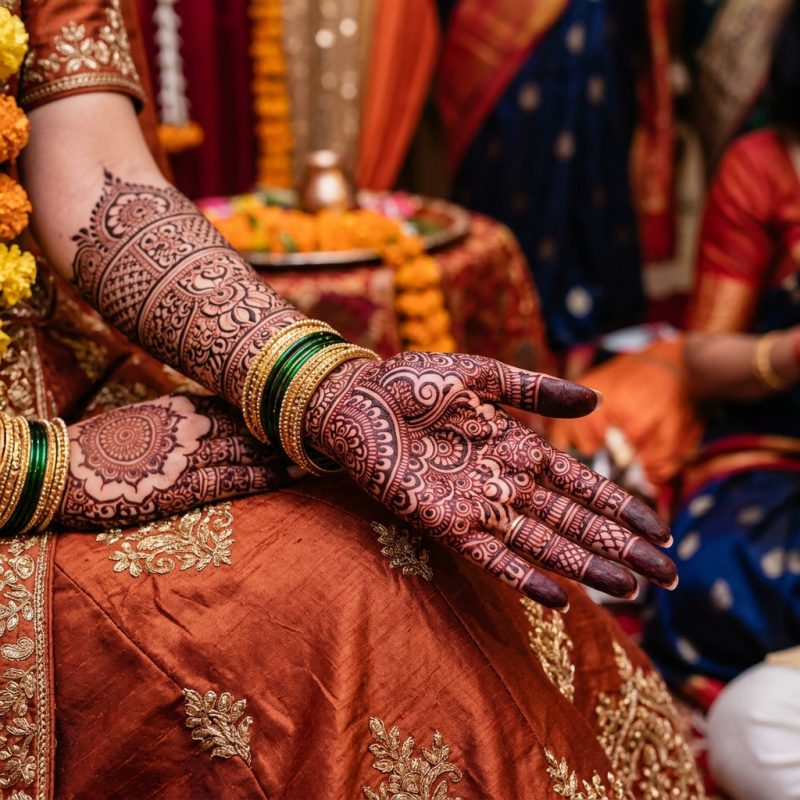
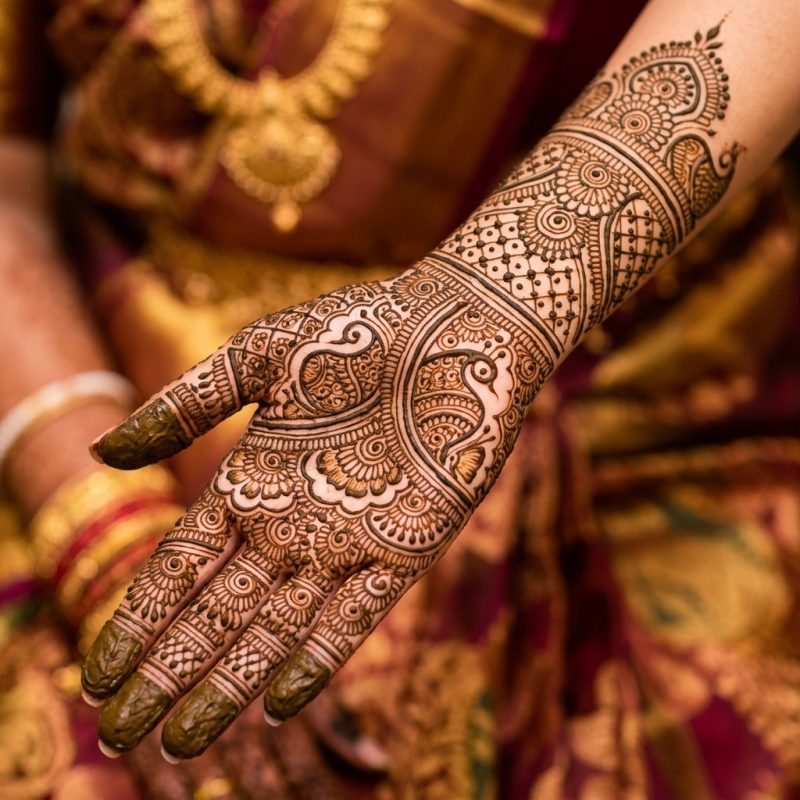
Indian mehndi is characterized by its density and intricacy — patterns that often cover the entire hand, sometimes extending up the forearm, with very little negative space left bare.
- Paisleys, peacocks, and floral motifs dominate this style
- Fine line work and tiny dots create incredibly detailed textures
- Often includes religious and traditional symbols like lotus flowers, deities, or mandalas
- Bridal Indian mehndi frequently incorporates the groom’s name or initials hidden somewhere within the pattern
Arabic Mehndi
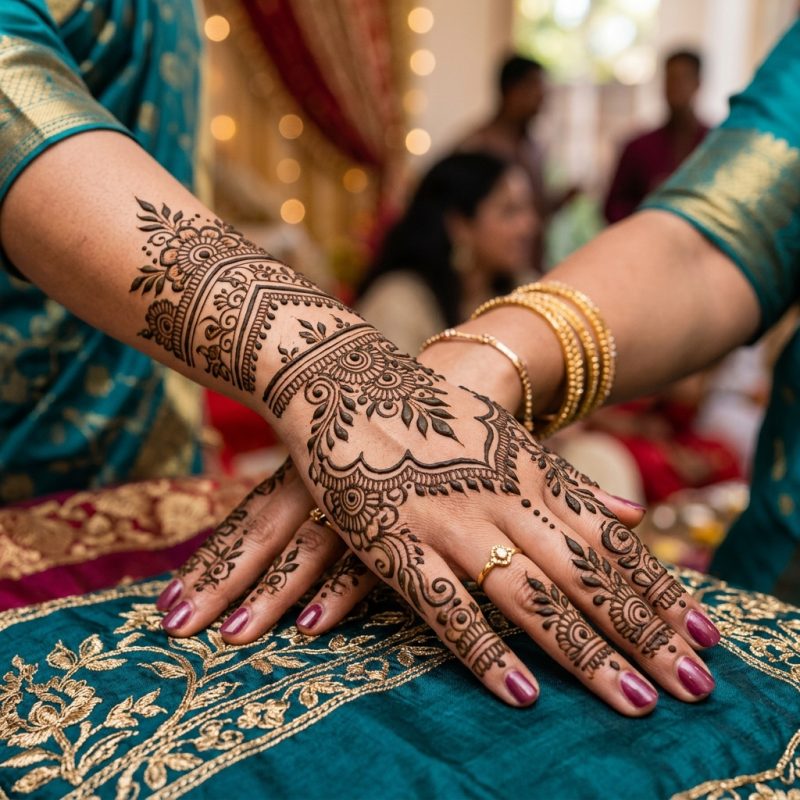
Arabic mehndi takes a dramatically different approach — bold, flowing floral and vine patterns with generous open space between elements rather than dense coverage.
- Large floral motifs with thick, confident strokes
- Trailing vine and leaf patterns that sweep diagonally across the hand
- Negative space is intentional — it’s a design feature, not an unfinished area
- Generally faster to apply than Indian mehndi due to the bolder, less intricate strokes
Pakistani Mehndi
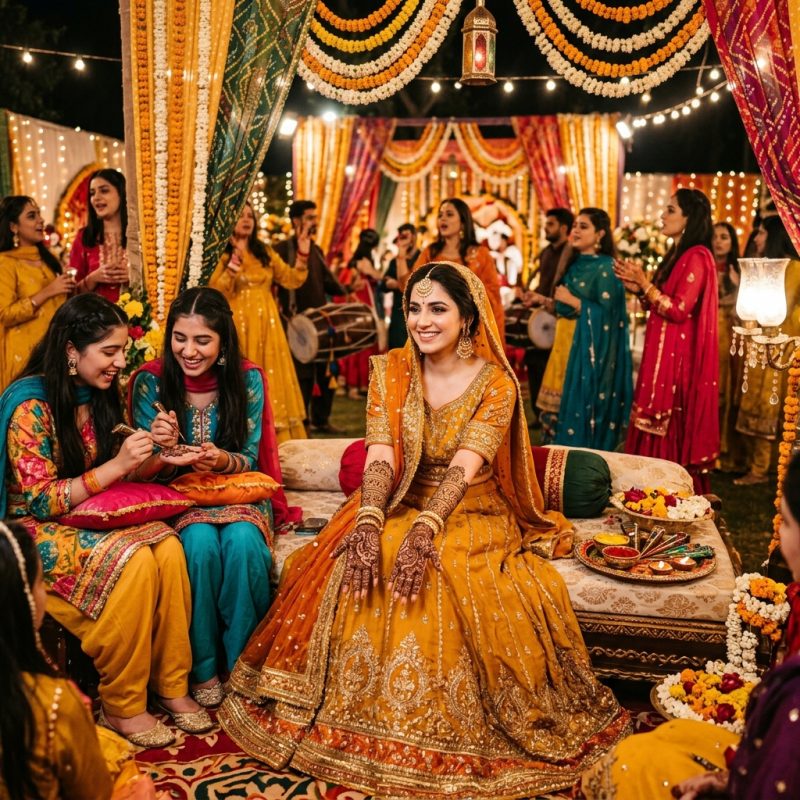
Pakistani mehndi often blends elements of both Indian and Arabic styles, leaning toward dense, elaborate patterns with a particular emphasis on geometric precision and fine detailing.
- Intricate net-like patterns covering the palm completely
- Heavy detailing on fingers, sometimes more elaborate than the palm itself
- Frequently features dabbi or checkerboard-style fillings within larger shapes
- Bridal versions often extend dramatically up the arms in elaborate, full-coverage patterns
Moroccan Mehndi
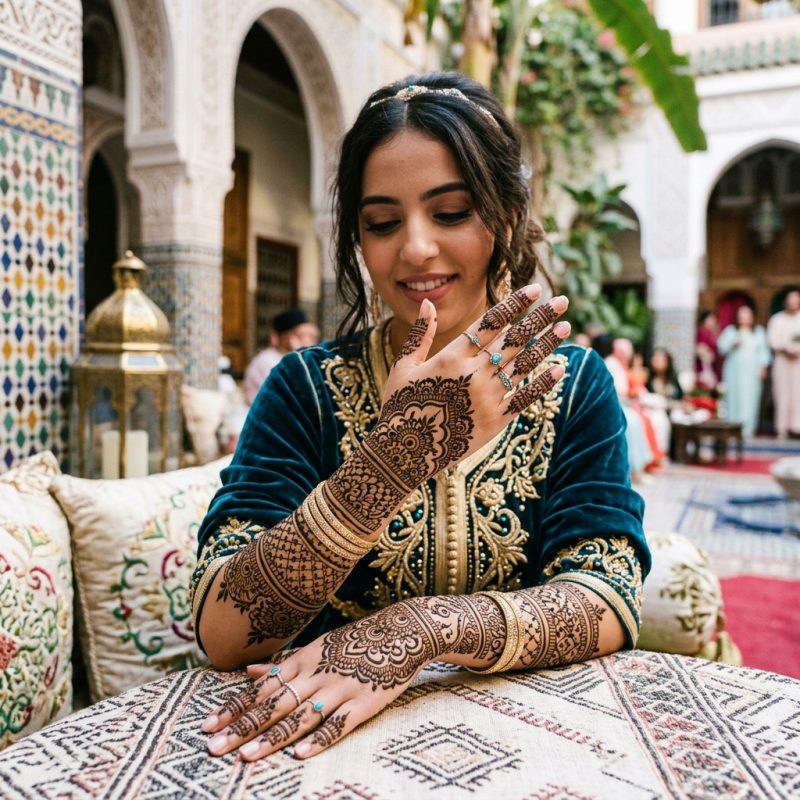
Moroccan mehndi stands apart with its geometric, almost architectural approach — angular shapes, symmetry, and patterns that draw from Berber tribal art traditions.
- Bold geometric lines rather than floral curves
- Symmetrical, almost mathematical patterning
- Often appears smaller and more contained than Indian or Pakistani styles
- Less commonly used for bridal mehndi, more often seen as standalone artistic body art
Mehndi Designs for Every Occasion
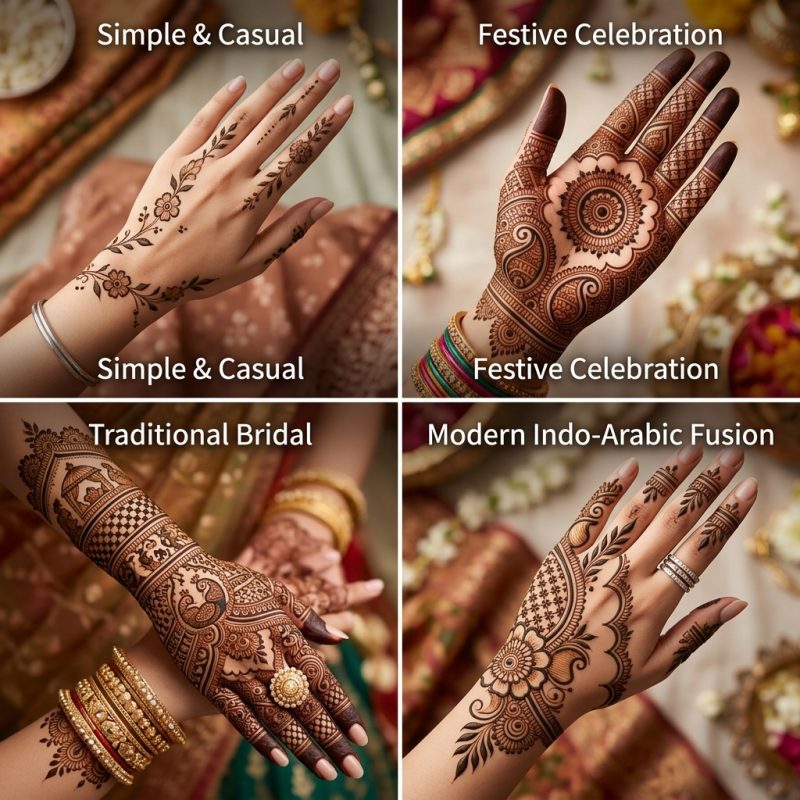
The right mehndi design depends enormously on the occasion. Here’s how to match your design choice to the moment.
Bridal Mehndi Designs
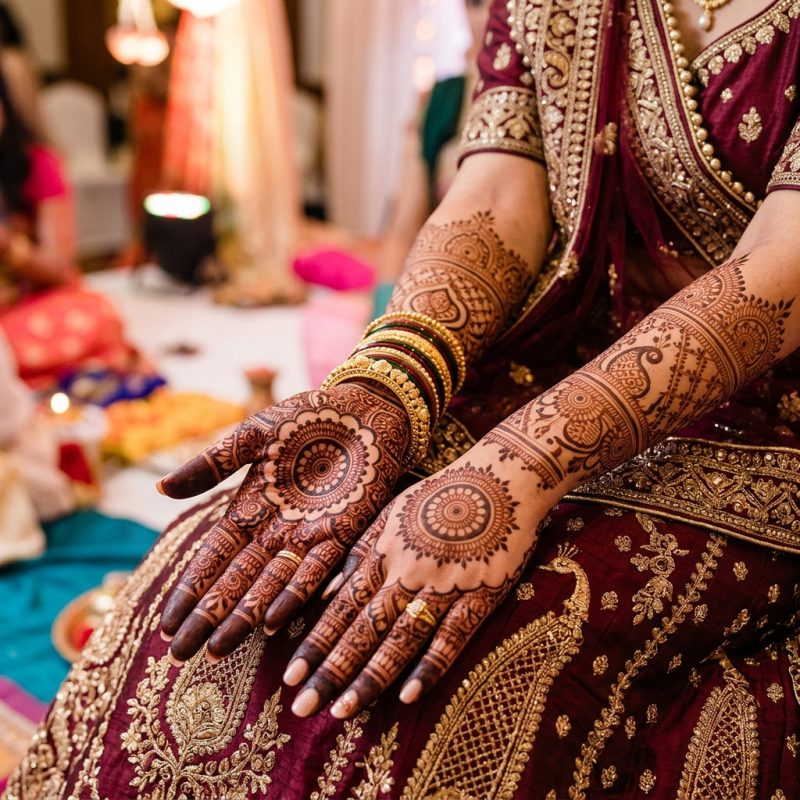
Bridal mehndi is the most elaborate and meaningful category — entire hands, often both arms and feet, covered in a single cohesive design that can take several hours to complete.
- Full hand and forearm coverage is the traditional standard for bridal designs
- Hidden initials of the partner are a beloved tradition in many South Asian wedding cultures
- Bridal portraits or wedding scene elements have become increasingly popular as personalized touches
- Consider booking your mehndi artist months in advance — talented bridal artists are heavily booked during wedding season
Pro tip: Schedule your bridal mehndi application the night before the wedding, giving the paste maximum time to sit and the stain time to develop to its richest, darkest color by the ceremony.
Festival Mehndi Designs
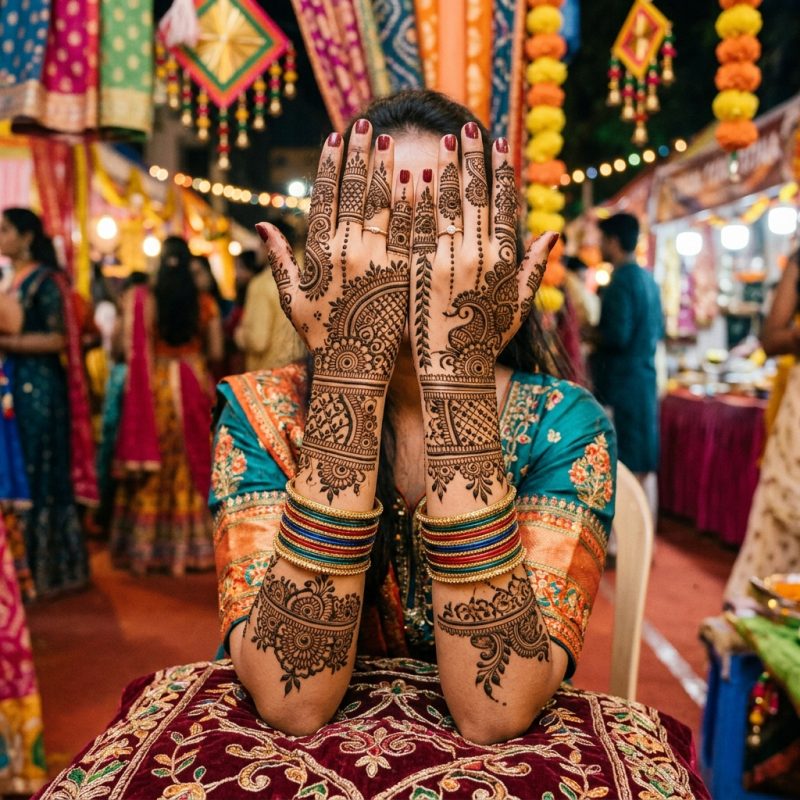
Festivals like Eid, Diwali, Karva Chauth, and Raksha Bandhan call for joyful, vibrant mehndi that doesn’t require the multi-hour commitment of bridal designs.
- Single hand or palm-focused designs are common and significantly faster to apply
- Festival-specific motifs — diyas for Diwali, crescents for Eid — add thematic meaning
- Finger-only designs are a popular, quick option for festivals with multiple celebrations happening close together
- Group application with family or friends is often part of the festival tradition itself, making it a social experience as much as a decorative one
Simple and Minimalist Mehndi Designs
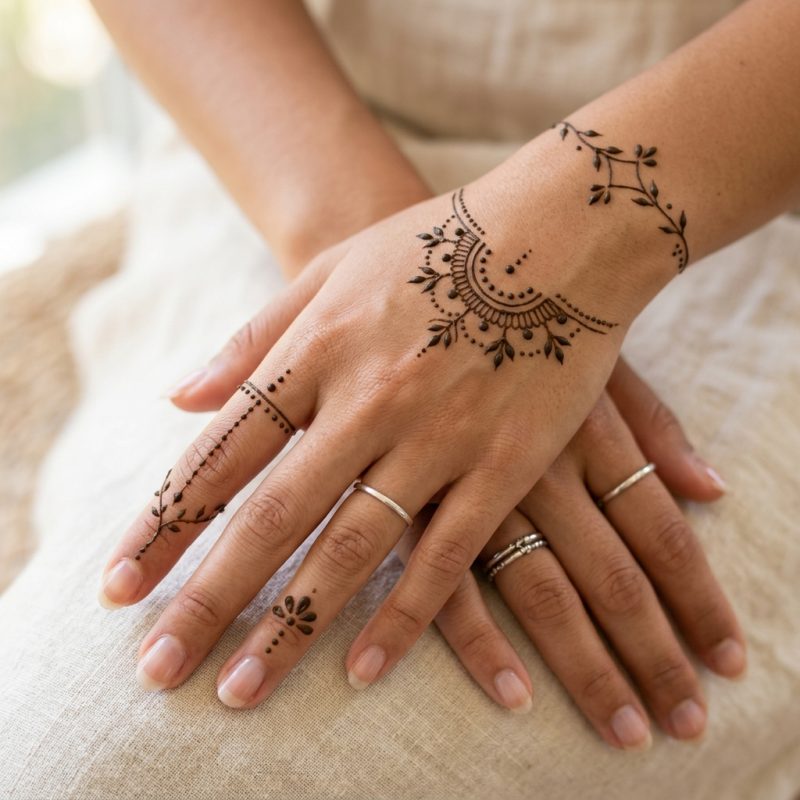
You don’t need a special occasion to enjoy mehndi — minimalist designs have become incredibly popular for everyday wear and casual styling.
- Single-line floral motifs on the back of the hand or wrist
- Finger-tip designs — small dots, simple flowers, or geometric shapes at the fingertips only
- Wrist bands or bracelet-style mehndi that mimic jewelry
- Tiny mandalas on the palm as a focal point without covering the entire hand
FYI — minimalist mehndi has genuinely exploded in popularity over the last few years, partly because it photographs beautifully for social media and partly because it requires a fraction of the time commitment. It’s the perfect entry point if you’re new to henna application. 😍
Choosing the Right Mehndi Design for Your Hand Shape
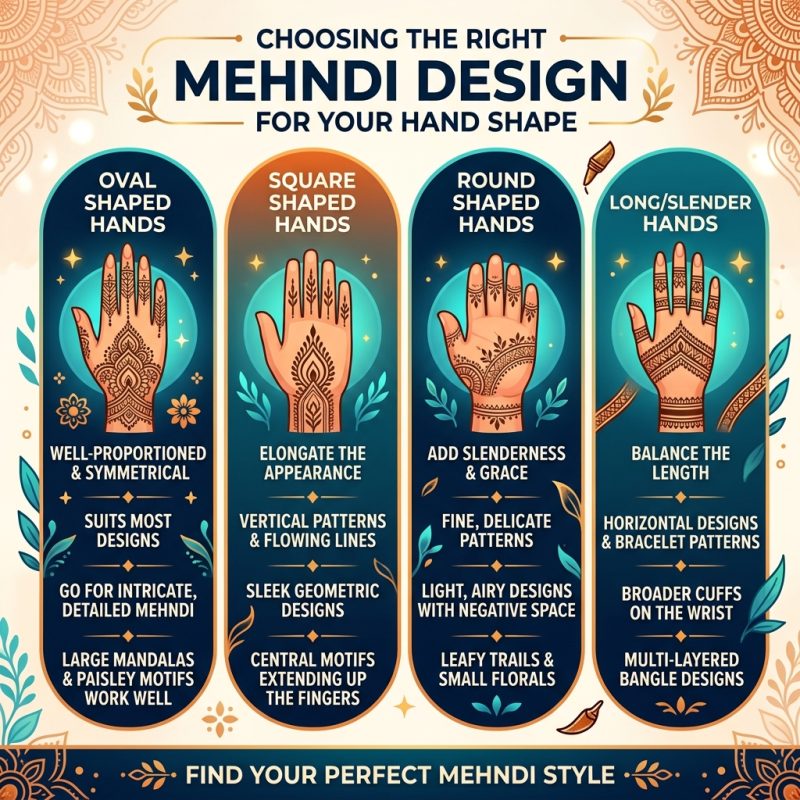
Just like hairstyles flatter different face shapes differently, mehndi designs can be chosen strategically to complement your specific hand shape and finger length.
For Long, Slender Fingers
- Horizontal band designs across the fingers balance length beautifully
- Ring-style finger mehndi at the base of each finger adds visual proportion
- Avoid very long vertical lines running the full length of the finger — they emphasize length further
For Shorter Fingers
- Vertical line patterns running up the fingers create the illusion of additional length
- Minimal fingertip designs that don’t overcrowd shorter finger surfaces
- Open, airy Arabic-style patterns avoid the visually shortening effect of dense coverage
For Larger Hands
- Bold, intricate Indian or Pakistani-style designs have ample canvas to be fully appreciated
- Full coverage patterns look proportionate and balanced
- This hand size beautifully accommodates elaborate bridal designs with maximum visual impact
For Smaller Hands
- Arabic-style designs with negative space prevent the pattern from looking overcrowded
- Concentrated focal points — like a centered mandala — rather than full coverage
- Finer, more delicate line work suits smaller surface areas more elegantly than bold, thick strokes
How to Apply Mehndi: A Step-by-Step Guide
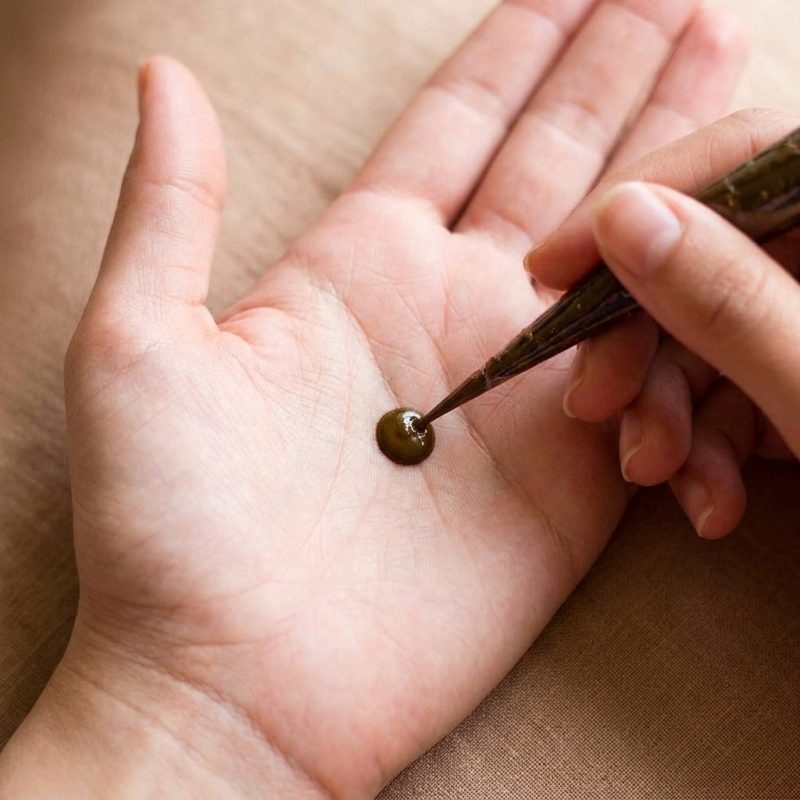
Whether you’re working with a professional artist or attempting your own design, understanding the application process helps you get the best possible results.
Preparing for Application
- Exfoliate your hands the day before — this removes dead skin cells that prevent deep staining
- Avoid moisturizing your hands and feet immediately before application — natural oils block henna absorption
- Choose your design in advance, with reference images ready if working with an artist
- Set aside adequate time — simple designs take 20–30 minutes; bridal designs can take 3–6 hours
- Wear comfortable, loose clothing with sleeves that won’t brush against wet paste
During Application
- Stay as still as possible while the paste is being applied to avoid smudging intricate linework
- Communicate placement preferences clearly before the artist begins — adjustments are much harder mid-design
- For self-application, work in small sections and use a cone with a fine, consistent tip for precision
After Application: Letting It Set
- Leave the paste on for at least 4–6 hours, though overnight produces the deepest, richest stain
- Avoid water contact entirely while the paste is drying and setting
- A mixture of lemon juice and sugar dabbed lightly over dried paste helps it adhere longer and deepens the eventual stain
- Wrap hands loosely in tissue or fabric if you need to sleep or move around while the paste sets
Making Your Mehndi Stain Last Longer and Darker
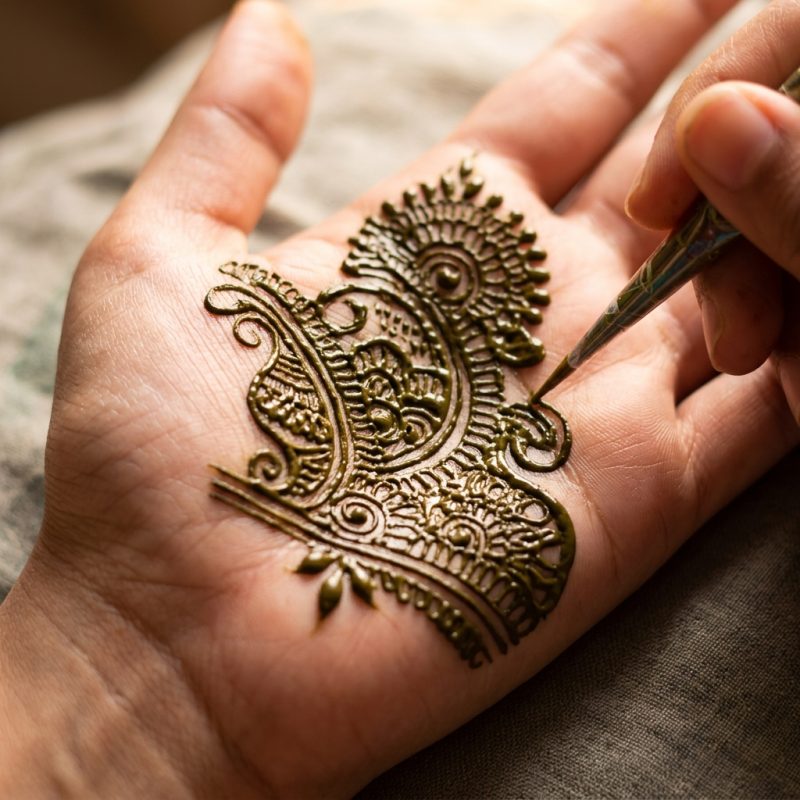
Everyone wants that deep, rich mahogany stain — here’s how to actually get it and keep it looking its best for as long as possible.
Maximizing Stain Depth
- Leave the paste on as long as possible — minimum 6 hours, ideally overnight
- Scrape off dried paste rather than washing it off immediately — water too early dilutes the staining process
- Apply a light coat of natural oil (mustard, clove, or eucalyptus) over the paste before bed to generate gentle heat that deepens color
- Avoid water for the first 24 hours after removing the paste — the color continues to oxidize and darken during this window
Extending the Life of Your Mehndi
- Apply natural oil or balm to the design daily to keep the stain moisturized and slow fading
- Avoid excessive hand washing with harsh soaps, which strip the stain prematurely
- Wear gloves while doing dishes or cleaning with chemical products
- Avoid direct exfoliation over the design area, which removes stained skin cells faster than natural fading
IMO, the oil step is the most underrated trick in the entire process. A little clove or mustard oil rubbed in nightly genuinely extends mehndi life by several days compared to leaving it completely unmaintained.
DIY vs. Professional Mehndi: Which Should You Choose?
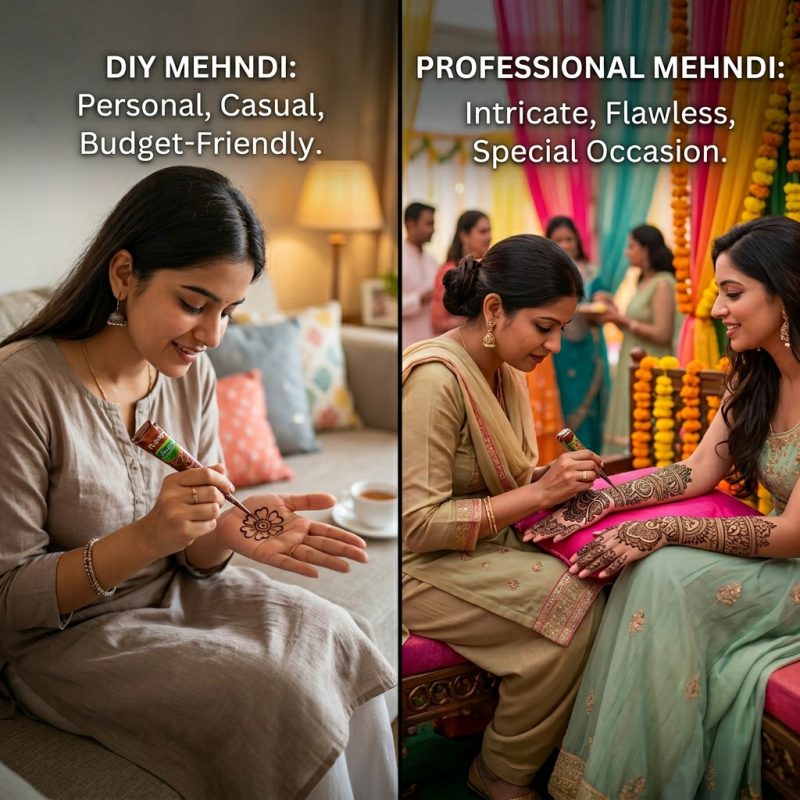
Both paths have genuine merit depending on your occasion, budget, and design ambitions.
When DIY Makes Sense
- Simple, minimalist designs for casual or personal occasions
- Practicing for skill-building before attempting more complex work
- Budget constraints — a cone of henna costs a fraction of professional application
- Small, low-stakes occasions where imperfection doesn’t carry significant weight
When to Hire a Professional Artist
- Bridal mehndi — the complexity, time investment, and significance warrant expert hands
- Large group events where consistent quality and efficient timing matter
- Intricate Indian or Pakistani-style full coverage designs that require years of trained technique
- Any occasion where the mehndi is a central, photographed feature of the celebration
Choosing the Right Henna: What to Look For
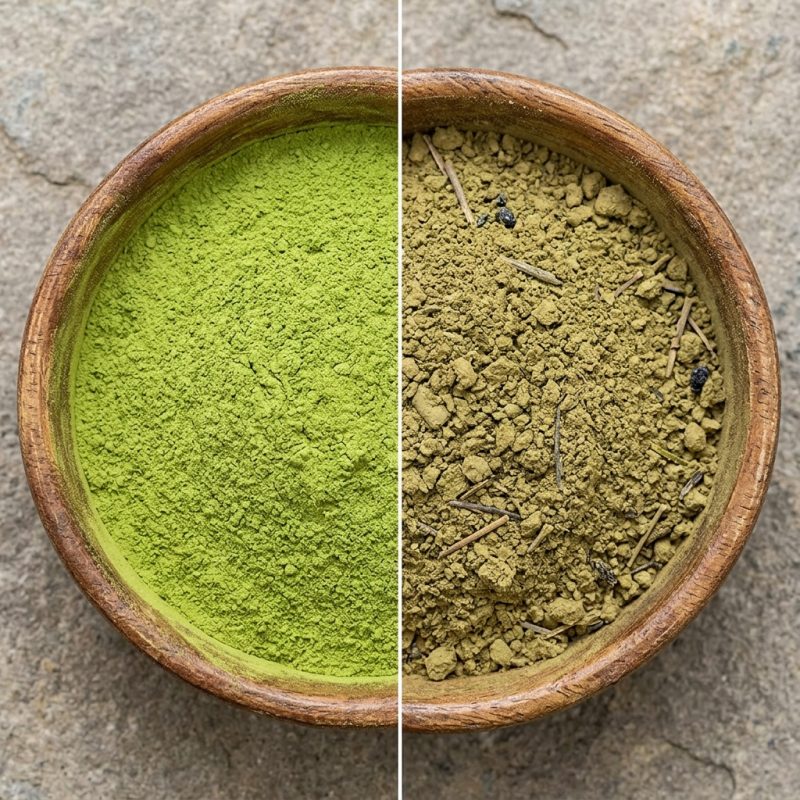
Not all henna is created equal, and the quality of your paste significantly affects your final result.
- Natural, chemical-free henna stains a warm reddish-brown and is the safest option for skin
- Avoid “black henna” — it often contains PPD (para-phenylenediamine), a chemical linked to serious allergic reactions and skin damage
- Fresh henna cones produce noticeably better results than old, dried-out cones — check expiration dates
- Essential oil additions (like cajeput or lavender) in quality henna mixtures improve staining without the risks of black henna additives
Conclusion:
Here’s everything wrapped up: mehndi designs offer an incredible range of styles, occasions, and personal expression — from elaborate bridal patterns that take hours to create to simple, minimalist designs you can apply yourself in twenty minutes on a quiet evening. Understanding the major styles, matching designs to your hand shape, and knowing how to properly apply and care for your henna are the keys to a result you’ll genuinely love.